Thawing Permafrost Unveils Hidden River Carbon Sink Mirage News Earth’s permafrost could soon release hidden ‘deep carbon,’ supercharging warming Scientific American

The MBTA on Wednesday announced service changes in July on the Green, Red and Needham lines. There are also some Commuter Rail service changes related to World Cup matchdays.
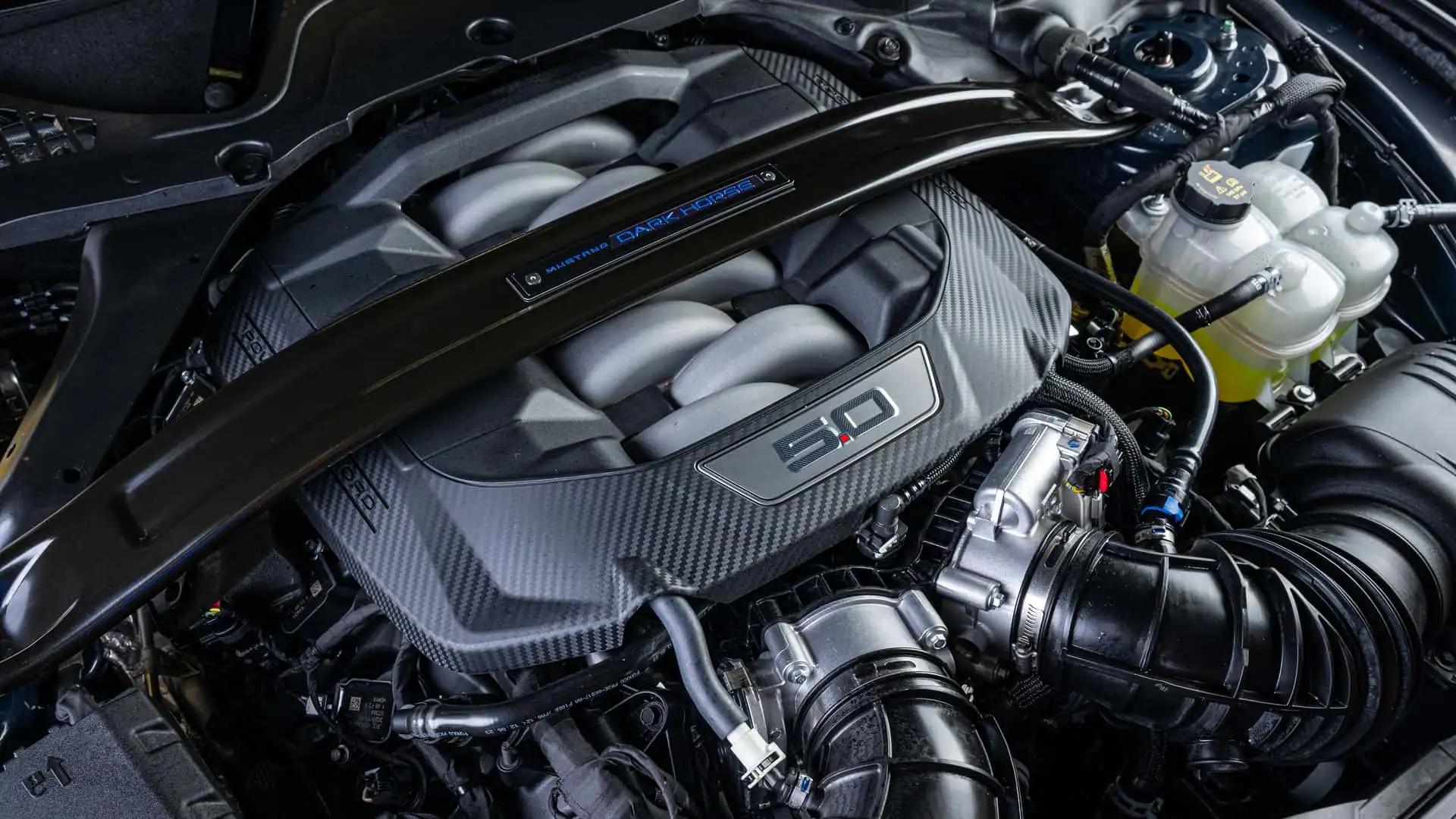
Ford is already seeing results from a new engine teardown program in its warranty data.
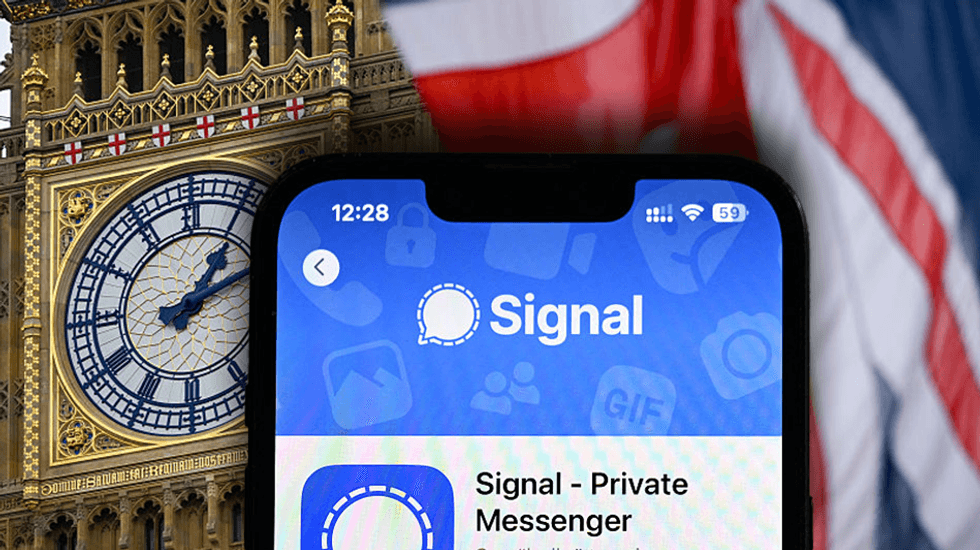
Messaging application company Signal is calling out the United Kingdom over its plans to implement age verification that the government says will "protect" children. As part of a new policy that would ban social media for those in the U.K. under 16 years old, the government has also announced plans to force companies to infiltrate the phone libraries of every youngster — and soon every person within its jurisdiction who fails to upload ID. 'Children deserve to be safe, protected, and nurtured. They do not deserve surveillance.' Such is the shocking scope and speed of the latest amendment to the country's Online Safety Act . Just last week, embattled and unpopular Prime Minister Keir Starmer announced content detection and blocking would only be turned by age verification check, a process that in practice requires universal ID submission and/or face scanning in order to use your phone in an ordinary fashion. An official government website details that the sitting Labour Party plans to force "Big Tech companies like Apple and Google" to activate built-in features or implement technical solutions to "detect and block nude images for children." This must take effect within the next three months for smartphones and tablets, Prime Minister Keir Starmer said . To implement these changes — which the government said would "prevent predators" from exploiting victims — anyone refusing to submit to the ID system would be unable to "take, share, or view nude content." Civil rights advocates and privacy-forward apps responded with outrage, warning that the measures would begin a rapid process of total national registry and surveillance. Representatives from the Signal app responded by threatening to withdraw entirely from the U.K. market unless major changes are made. "Children deserve to be safe, protected, and nurtured. They do not deserve surveillance," Signal said in a press release . "The U.K. government’s demand that all content on all devices sold or used in the UK be scanned on the presumption of nudity, using a dystopian combination of age verification and content scanning, will not safeguard children. It endangers us all," they added. RELATED: Livid judge cancels trial and busts lawyers for faking briefs with AI — on both sides After describing the U.K. government's demand as a dystopian phone scanning operation, the company then warned such policies would lead to the government wielding its powers as a method of censorship and surveillance under the guise of what officials might consider to be "threats" or "harmful content." "Wherever it runs, including the 'camera' itself once it is in place on U.K. devices — its scope will be defined by the whims and proscriptions of the government to detect nudity today and political speech tomorrow," Signal warned. Of course, social media companies came at the policy change from a different angle, saying that pushing teens off their platforms would only lead to less safety. RELATED: The backlash against AI reveals it’s a terrible scapegoat Thomas Trutschel/Photothek/Getty Images "Blanket bans push kids out of such curated, supervised, beneficial experiences and towards anonymous, less safe services," a YouTube spokesperson told CNBC . A Meta spokesperson told the outlet that bans risk isolating teenagers from online communities and information, which would send them to unregulated alternatives. Other restrictions in the U.K. include blocking livestream and communication with strangers for those under 16 and a consideration for online curfews overnight. Like Blaze News? Bypass the censors, sign up for our newsletters, and get stories like this direct to your inbox. Sign up here !

Aaron Elijah Mars is the founder of two open-source AI projects, Aeon and MiroShark, both built on the conviction that software should run, observe, and ship without waiting for a human prompt. Aeon is a GitHub-native autonomous agent framework where each agent is defined by a SOUL.md (a model of the user's worldview), a STRATEGY.md (their goals), and skills, with every action logged and auditable in real time so it can be rolled back. MiroShark is a simulation company, described as "World Models for decision-making," that ingests an article or corpus, spins up distinct AI personas with different underlying models, and lets them act and react across simulated X, Reddit, and a Polymarket-style AMM. Because agents see and respond to each other, it produces situational signal that a single-agent "AI focus group" cannot. MiroShark runs on x402 over Base with no API key or signup, and related work on Bankr lets agents fund their own inference through swap fees, turning each new agent skill into a product and enabling agent-to-agent commerce.

The post Samsung Rolls Out May 2026 Security Update to Older Galaxy Watches appeared first on Android Headlines .
Meet Katrina Cole, an Information Security Consultant who entered tech at age 40. Read her advice for women in tech and her proactive approach to security. This article has been indexed from Blog Read the original article: Keep Your Tech... Read more → The post Keep Your Tech FLAME Alive: Trailblazer Katrina Cole appeared first on IT Security News .

IBC 2026 will place artificial intelligence, emerging technologies and industry collaboration at the heart of this year’s event, with organisers unveiling an expanded Future Tech programme, a new peer-to-peer networking [...]
HYPR’s live demo shows how easily deepfakes can enable identity fraud. The post Deepfakes Are Lowering the Barrier to Identity Fraud appeared first on eSecurity Planet. This article has been indexed from eSecurity Planet Read the original article: Deepfakes Are... Read more → The post Deepfakes Are Lowering the Barrier to Identity Fraud appeared first on IT Security News .

WhatsApp Business could potentially start charging users who want to link more than four devices to the same account in a future update.

A bug in Google Messages is causing severe battery drain and overheating on some devices. Here's a temporary fix while you wait for Google to push an update.

Redmi 10 Power Price in India: Redmi has launched its new smartphone Redmi 10 Power in India. The smartphone was launched along with Redmi 10A, on Wednesday, 20 April in India
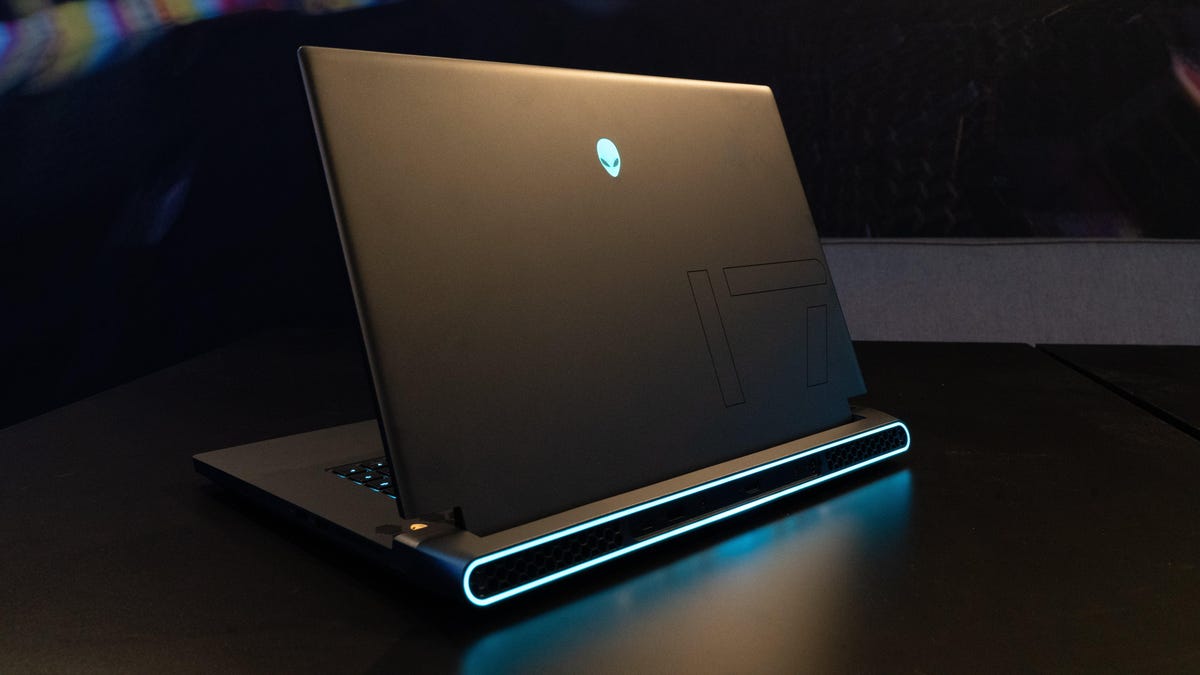
The premium Alienware m15 R7 and m17 R5 highlight four new Ryzen-powered systems.
Apple is offering its new firmware update for the MagSafe accessory that promises to give you faster charging for the compatible iPhone models.

System apps with native call-recording functionality remain unaffected.

The OnePlus Nord 2T India launch may take place soon as the moniker has been spotted on the TDRA certification. The OnePlus Nord 2T's camera details have also been leaked. Here are the expected specifications of the device.

The iPhone 16 is likely to be the first Apple device to skip the camera notch.

Garena Free Fire Max redeem codes are 12-digit codes that are region-specific and can be used by players to gain an edge over rivals in every round of the battle royale game.

We are still not sure that no-charger policy will be limited to Narzo 50A Prime or it will be extended to other Realme budget, mid-segment and premium phones